
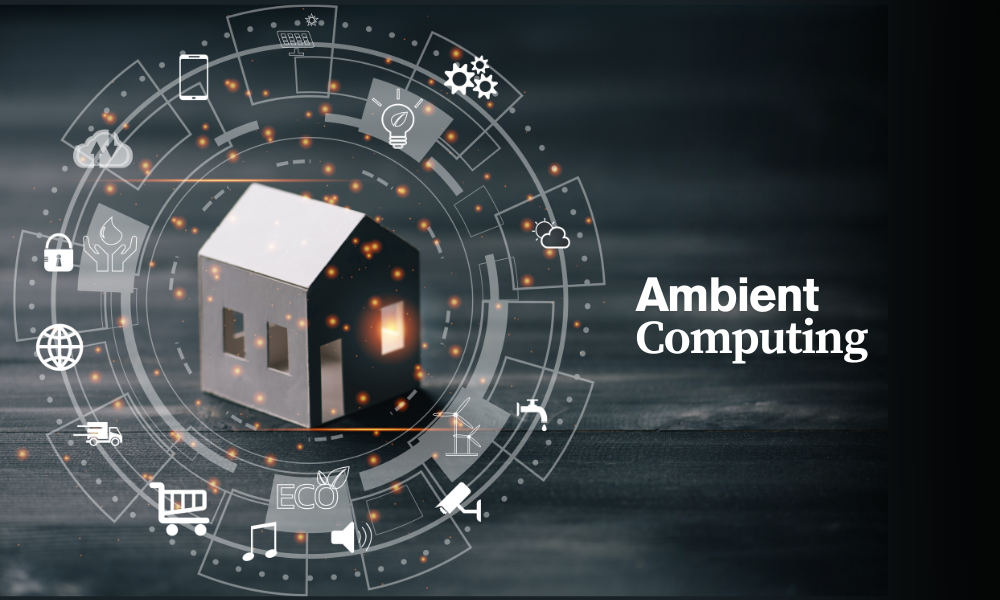
For decades, technology has been something we actively interacted with: we tapped on keyboards, swiped on screens, and clicked through menus. But a major shift is underway—one where computing becomes less visible, less intrusive, and more seamlessly woven into our environment. This shift is known as ambient computing, and it represents the next major evolution in how humans and machines coexist. Rather than requiring our full attention, ambient computing surrounds us quietly, gathering context and offering assistance exactly when needed. The idea is simple: technology works so smoothly that we barely even notice it.
The seeds of ambient computing have existed for years. Smart speakers responded to voice commands, thermostats adjusted temperatures automatically, and wearables tracked health metrics in the background. But these early systems were limited—they relied on isolated platforms, fragmented data, and narrow use cases. True ambient computing requires unifying technologies such as artificial intelligence, edge processing, advanced sensors, and personalized context models. Only now, as AI becomes exponentially more capable, do we see these elements converging into a cohesive, invisible ecosystem.
One of the biggest accelerators of ambient computing has been the rapid advancement of AI assistants. They are no longer rigid command-based bots; they can now interpret natural language, anticipate needs, and even take proactive actions. For example, an AI system might automatically reschedule a meeting if it detects a conflict, dim the lights when the room becomes too bright, or adjust a user’s work schedule based on their energy patterns. These assistants are transitioning from reactive tools to collaborative digital partners, capable of understanding not just instructions, but intentions.
Another crucial pillar is the emergence of context-aware devices. These gadgets don’t merely receive inputs—they interpret surroundings. Modern sensors can detect biometrics, environmental changes, user habits, and spatial relationships. A smart home, for instance, can learn when its occupants typically wake up, what temperatures they prefer, and how they move through the house. This contextual understanding allows systems to respond automatically without manual configuration. When computing becomes context-aware, it begins to behave like a silent companion that adapts fluidly to human needs.
Ambient computing is also redefining the future of work. Offices are slowly transitioning into intelligent environments where lighting, ventilation, and collaboration tools adjust dynamically. Instead of overwhelming workers with notifications, ambient systems can surface relevant information only when it matters. Imagine walking into a conference room where project details automatically appear on the display because the AI knows which meeting you’re attending. Or a workplace where devices securely authenticate and personalize themselves as soon as an employee enters the space. These scenarios once felt futuristic, but they are quickly becoming reality.
Privacy concerns, however, remain the biggest hurdle for widespread adoption. Ambient technologies require constant data gathering, environmental monitoring, and cross-device communication. Without robust safeguards, users may feel uneasy about how much information is being collected. The success of ambient computing depends on establishing transparent policies, ultra-secure systems, and user-controlled data permissions. Trust must be embedded into the architecture—not added as an afterthought. As companies refine these technologies, ethical design and privacy-by-default principles will play a decisive role in public acceptance.
Looking ahead, ambient computing could fundamentally reshape digital interaction. Instead of notebooks, phones, and tablets being the center of our technological world, computational intelligence will be woven into everyday objects—furniture, vehicles, appliances, clothing, and even public spaces. Technology will no longer demand our attention; it will gently complement our lives. That shift unlocks new creative possibilities while also encouraging healthier relationships with our digital environments. The ultimate vision is simple: technology that respects our time, understands our behavior, and blends into the background so elegantly that we forget it’s even there.
Ambient computing is not just another tech trend—it’s a paradigm shift toward more human-centric digital experiences. As AI grows more capable and technologies become more harmonious, invisible computing could define the next era of innovation. We are approaching a world where digital assistance is everywhere, always available, and effortlessly integrated into our daily lives. And ironically, the more advanced it becomes, the less we may notice it at all.