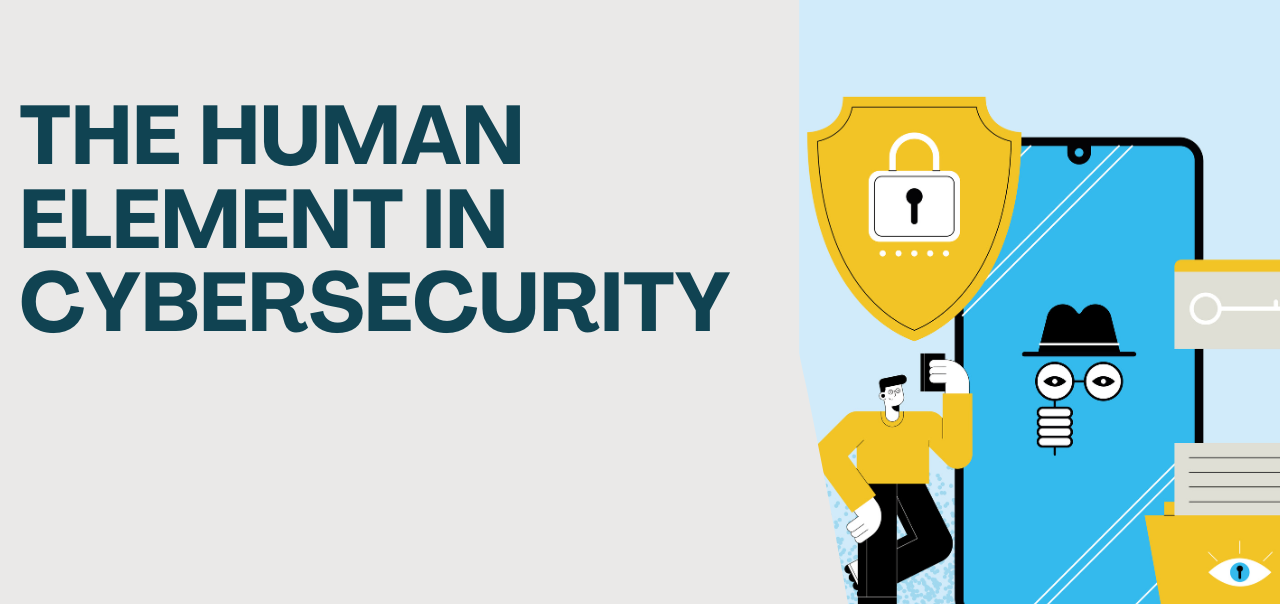
Despite advancements in firewalls, AI-driven detection systems, encryption, and automated threat response, one fact remains unchanged: humans are still the weakest link in cybersecurity. Studies consistently show that over 80% of breaches involve human error—whether through weak passwords, falling for phishing scams, misconfiguring cloud services, or unknowingly exposing sensitive data. In a world where technology continues to evolve, understanding and strengthening the human element has become essential for building a secure digital environment.
One of the most common human-related risks is phishing, which remains the most successful attack method today. Cybercriminals use deceptive emails, messages, or websites to trick individuals into revealing passwords, downloading malware, or transferring money. Thanks to AI, phishing attacks have become far more sophisticated. Personalized messages that mimic coworkers, banks, or government agencies can be created in seconds using publicly available data. Attackers also use techniques like deepfake voice calls and chatbot-driven interactions, making the scams even harder to detect. Even tech-savvy individuals can fall victim when under stress or distraction.
Another major contributor to human-related breaches is poor password practices. Despite constant warnings, many people still use weak or reused passwords across multiple accounts. Attackers capitalize on this through credential stuffing, where stolen usernames and passwords are tested across different platforms. A breach on one site can easily cascade into compromises elsewhere. Multi-factor authentication helps reduce this risk, but user resistance, inconvenience, or unfamiliarity often slow adoption. Encouraging password managers and automated credential generation is one of the most effective ways to improve security without relying on human memory.
Misconfigurations are another significant issue. As companies move to cloud platforms like AWS, Google Cloud, and Azure, administrators must manage complex settings and permissions. A single incorrectly set access control—or an unintentionally public storage bucket—can expose massive amounts of data. These mistakes are usually not malicious but stem from lack of training, unclear processes, or pressure to deploy quickly. Cybercriminals frequently scan the internet for such misconfigurations, exploiting them the moment they appear.
The rise of remote work has also amplified human vulnerabilities. Employees working from home often use personal devices, unsecured Wi-Fi networks, or outdated software. Home environments lack the security protections typically found in corporate offices. Additionally, remote workers are more susceptible to social engineering because attackers can impersonate managers or IT staff through email or messaging apps without the context cues provided by in-person interactions. Security policies must adapt to this new reality, focusing on endpoint protection, encrypted communication, and continuous awareness training.
Despite all these risks, people are also a company’s first line of defense—when properly educated and empowered. This is why cybersecurity awareness training has become more important than ever. However, traditional annual “check-the-box” training is not enough. Modern cyber threats evolve rapidly, and employees need ongoing, interactive education. Simulated phishing exercises, gamified learning, real-world examples, and short, frequent lessons are far more effective at building long-term awareness.
Another way to strengthen the human element is by creating a strong security culture. When employees feel comfortable reporting suspicious emails, unusual activity, or mistakes without fear of punishment, organizations detect incidents much faster. A blame-free environment encourages transparency and helps security teams address issues before they escalate. Leaders play a key role by modeling good security habits—using MFA, following policies, and encouraging others to prioritize cybersecurity.
Technology can also support people through intelligent safeguards. AI-powered tools can detect unusual activity, block suspicious links, and guide users away from risky actions. For example, automated alerts can notify employees when they attempt to send sensitive files externally or access resources they shouldn’t. These systems don’t replace human judgment but provide guardrails that reduce the chance of mistakes.
Of course, cybercriminals aren’t the only threat. Insider threats—both intentional and accidental—are growing. Disgruntled employees, contractors with excessive access, or careless data handling can all lead to serious breaches. Zero-trust architecture helps mitigate these risks by enforcing least-privileged access and constant verification. Monitoring for unusual behavior, such as downloading large amounts of data or accessing sensitive files at odd hours, is also critical.
Ultimately, the human element is both a risk and an opportunity. While people can unintentionally open doors to attackers, they can also be the strongest asset when properly trained, supported, and equipped with the right tools. Cybersecurity is not just a technical challenge—it’s a behavioral one.
As digital systems become more integrated into everyday life, prioritizing human-centered cybersecurity is essential. By building awareness, fostering a strong security culture, embracing continuous learning, and providing smart technological support, organizations can transform their people from vulnerabilities into powerful defenders. In the end, cybersecurity is everyone’s responsibility—and strengthening the human element is the most important step toward a safer digital future.